
Если вы заинтересованы в сотрудничестве и готовы вкладывать усилия в развитие ИИ в России, напишите нам на
info@a-ai.ru
Юридический адрес: 125009, г. Москва, пер. Романов, д.4, стр 2.
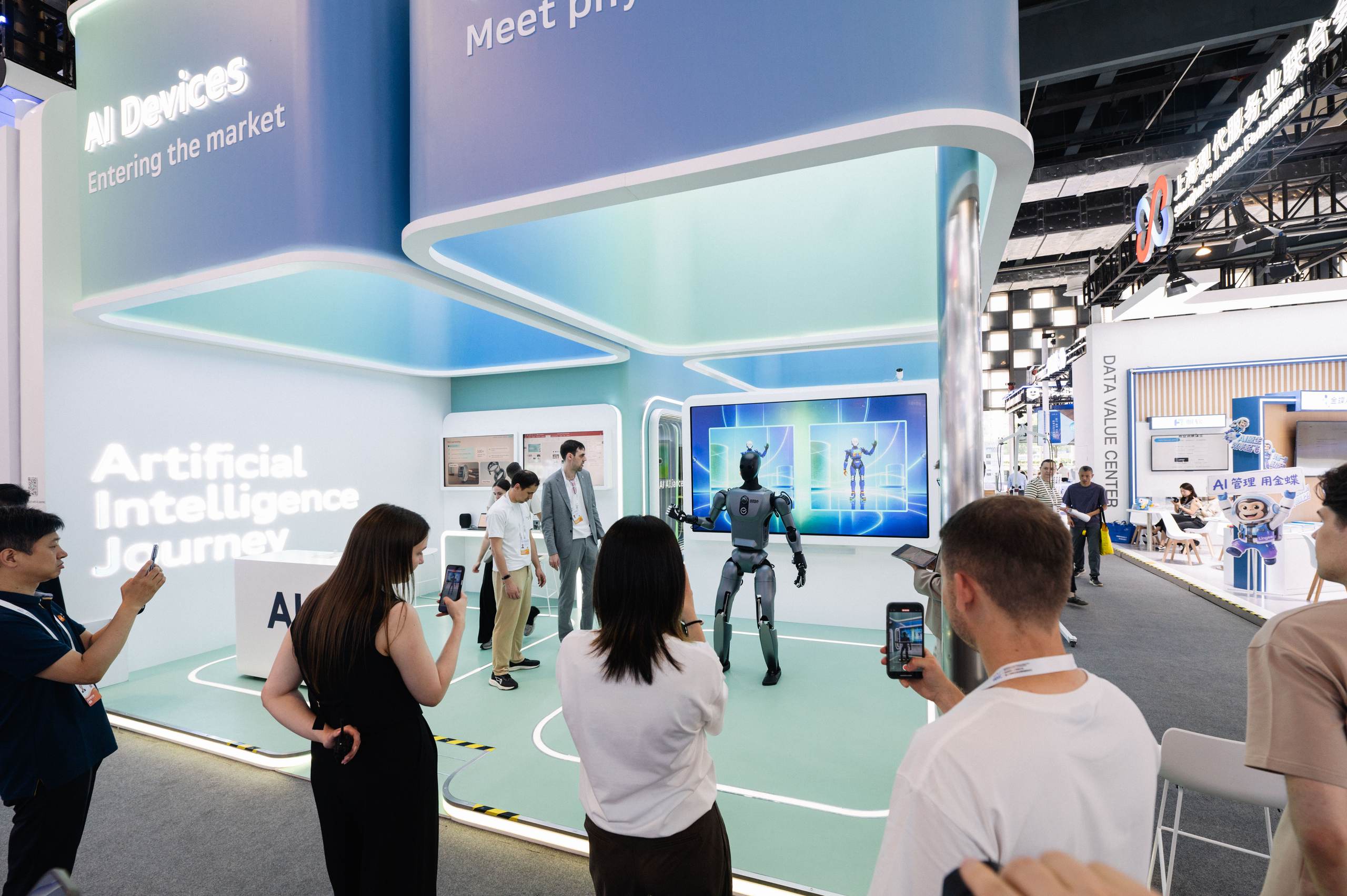
A sovereign AI stack is a strategic response to possible restrictions on access to foreign models. Alexander Vedyakhin, First Deputy Chairman of the Management Board of Sberbank and Chairman of the Supervisory Board of the Artificial Intelligence Alliance, commented on the potential risks of restricting access to advanced Chinese-developed AI models in an interview with the Chinese media outlet SINA on the sidelines of the WAIC 2026 international conference.
Alexander Vedyakhin, First Deputy Chairman of the Management Board of Sberbank and Chairman of the Supervisory Board of the AI Alliance:
“Any country possessing cutting-edge AI technologies will, sooner or later, ask itself how to protect them and formulate the rules of the game—rules that have long been discussed around the world.
For us, this confirms that we have chosen the right strategy. From the very beginning, the companies participating in the AI Alliance have built their LLM models as a sovereign stack, independent of external suppliers. This is not about isolation; it is about technological resilience achieved through our own Russian infrastructure, computing power, and engineering teams.
As for specific risks, I believe that Russia will not find itself completely cut off from Chinese solutions; access may simply become more regulated.”
As evidence of the maturity of the Russian ecosystem, the expert highlighted the open-source projects of Alliance members: Yandex has published over a thousand open-source projects, 52 of which are in the field of machine learning and AI, including the YandexGPT 5 Lite models; “T-Technologies” (T-Bank) is developing the open-source Russian-language models T-Lite and T-Pro, with 7 billion and 32 billion parameters, respectively.
Responding to a question about the balance between openness and commercial interests, Alexander Vedyakhin emphasized that the Alliance does not view these approaches as mutually exclusive. Open-source models provide developers and researchers with access to cutting-edge Russian solutions without the need to turn to foreign alternatives, while corporate products offer businesses predictability and support during the industrial deployment phase.